Showing posts with label multilingualism. Show all posts

06 August 2013

Jalapeños in Helsinki

A few years ago, one of my retired graduate school mentors dropped me a line after his first-ever trip to Finland.  He saw many people that resembled me, which he explained as persistent evidence of inbreeding in a still relatively insular society.  (I was amused by this characteristic observation from a confirmed sociobiologist).  On my recent trip to Finland after two years in southern France where people seem shorter and smaller and have more dramatic coloring, I did feel like my blonde hair, pale skin, and height were just about average.  In my own sociological view though, what really stood out for me on my visit was how globally diverse Finland has become, and how easily English rolled off people's tongues.

I was thrilled to discover so many people of foreign origins speaking Finnish fluently.  There was the man of Chinese, or perhaps Korean origin, who sold me a hat at the flea market in Naantali; his Finnish had a lovely inflection as did the Helsinki bus driver's, whose native tongue was probably Arabic.  At the airport, the young grocery store cashier with the dark, perhaps African complexion seemed to have absolutely no accent that I could detect, nor did the airline agent of Somali or north-central African origin.  Aside from a course I took many years ago in Helsinki with other young students from mostly Europe, I have never before heard fluent Finnish spoken by such a diverse group of people. In the past, it was my accent or inflections that puzzled Finns who couldn't quite place my origins.  Today, many more immigrants have come to Finland from beyond Europe, settling in to work and learn the language of their new country.

I was also pleasantly surprised by the ease with which young Finns slip between English and Finnish.  When I was younger, just the shop clerks at the big department stores and flight crews spoke English comfortably, but now, museum ticket-takers, waiters, ice cream stand sellers, apartment managers, all effortlessly switched to English when my husband was talking, and then switched back to Finnish when I spoke up.  Today, English is the first foreign language that Finnish schoolchildren take in school, and it is then followed by, instead of preceded by, the second national language, Swedish.  This, along with the ubiquitous English-language television programming which is subtitled but not dubbed as it is in France, means that Finns are broadly exposed to English.  It is after all the official language of the EU.  Yet it doesn't appear that Finnish is disappearing by any means, as it clearly remains important for the immigrants who make Finland their home.  As with many languages, external influences are enhancing how the Finnish vocabulary develops.  In a short article in a Finnish women's magazine, the chairperson of the Left-Wing Youth used many Anglicisms: would people get the 'pointi', if women 'sheivaa' or not their body hair? ("Antaa Rehottaa", Me Naiset, 1.8.2013, nro. 31, p. 16).

Finally, we also observed that the foreign culinary influence in Finland has widened, as we discovered jalapeños on our hamburgers and pizzas! Subsequently, we noticed the proliferation of Mexican-influenced restaurants in Helsinki.  While we enjoyed eating certain uniquely Finnish foods (the meat pies, the rice pasties, Fazer chocolates and candies), we did appreciate the flavor enhancements brought about by globalization.  Apparently, so do other Finns.  In a newspaper interview comparing the values of Finnish elites and ordinary people (that I happened to catch a glimpse of at the Cafe Strindberg on my second to last day in Helsinki, "Homoliitto erotti eliitti-Benin ja kansa-Karon" by Hannu Tikkala, 4.8.2013, Helsingin Sanomat), the Finnish guy representing the point of view of ordinary Finns pointed out that having international workers and people in Finland means that Finland gets better food...and better-looking people.  While I don't know about the latter, there are clearly benefits associated with the global movement of people, languages, and traditions.

11 February 2013

Ponts

As  I prepare my online courses for each quarter, I frequently think about ways to engage my students actively.  The emphasis on active learning is especially strong at the community college-level, where more personalized instruction is often possible and learning outcomes are frequently tied to active learning strategies, but I employ such strategies as much as I can at the university level too.  Active learning strategies are essentially a pont (a bridge) between the abstract concepts we teach and the concrete understanding of these.  By engaging learners actively in understanding a concept or procedure or way of thinking, such as through experience, or a project, or experiment, we hope to create higher-order and more independent thinking.  Some of the bridging strategies we employ today are new to higher education, but in other respects, we have long employed active learning strategies in education.  In particular, I am thinking about the field trip, or the school trip.  Such trips offer active, experiential learning that can enhance what has been learned previously in a classroom.  I fashion field trips for some of my online courses, where I ask students to do an independent field observation of social behavior, or for my face-to-face courses when I require service learning or when I have walked students to spaces on campuses to show concretely what sociologists can learn from outside stained glass windows (in my sociology of religion course) or from library-provided research databases (in my introduction to sociology course).  Field trips are of course common in the U.S. at the compulsory educational level.  I for one have many memories of school field trips, such as the one to plant fir seedlings on the Olympic Peninsula in 6th grade, or another one in high school, to Seattle (the big city!) to perform in a marching band competition.
 
Active learning opportunities in the form of school exchanges and field trips are also available all over the l'Union Européenne (European Union, the French reverse the EU).  The EU sponsors cultural bridge opportunities for schools across member states, such as those available under the Comenius Lifelong learning program.  From our U.S. perspective, these opportunities seem so cosmopolitan because they involve the crossing of national borders and multiple languages, whereas field trips across similar distances in the U.S. take us at most to another state.  But the active learning occurs regardless of where the field trips take students.  This year and next year, our boys' school is engaged in Comenius-sponsored bilateral school project with a middle school in Prague.  (Details about EU-sponsored Comenius Bilateral school projects are available directly on the EU website for Lifelong learning programs, click here  http://ec.europa.eu/education/comenius/school_en.htm  and then on the link to bilateral projects.)  Without explicitly say so, these bilateral projects are clearly meant to offer experiential and active learning opportunities through language learning, through the study of a theme of mutual interest, and through cultural exchange.  The project documentation also mentions the goal of 'enhancing the European dimension of education.' 

The subject of the bilateral project between Collège Auguste Mignet in Aix en Provence and Ďáblice middle school in Prague is the Czech composer Boruslav Martinů.  He studied and performed music in Prague, and after leaving his homeland en route to the United States, he made a brief visit to Aix, where he composed some music and developed a friendship with Aix composer Darius Milhaud (for whom the Aix music conservatory is named).  (Click here for a brief explanation of the project thus far, by the organizing teacher on the French school's website, in French.  Click here for my translation, in English.  And again here, for the Czech school's announcement of the project, in Czech. )  Martinů thus represents un pont entre deux cultures (a bridge between two cultures), while the bilateral school project itself offers a pedagogical bridge over which the students will make connections between what they are learning about Martinů at school and what they experience in the physical and cultural environment in which he did some of his work.  Of course, I see many sociological learning opportunities here as well, as the students will surely begin to recognize that underlying the cultural and linguistic differences are basic social and human qualities that we all share.

Right now, the French school's students are doing their 'detective work', as the organizing teacher calls it, to understand who Martinů was, and what his connection to Aix was.  They are also learning some basic Czech and rehearsing a theatrical piece inspired by Martinů and his life that they will perform while in Prague.  Our son's private piano teacher is helping him learn a bit about Martinů through his music, with a lively and challenging piano composition from Borová, his Seven Czech dances (in this case, the 7th dance).  The actual 10-day trip to Prague this spring will represent the high point of active learning, where students will gain understanding by crossing the bridge between abstract knowledge and concrete experiences, and during which they will no doubt trace Martinů's steps in Prague a bit, perhaps even crossing some of the same physical bridges as he did.  An equivalent learning experience will take place for the Czech students when they come to Aix the following year to see where Martinů lived briefly and composed.  While some of the learning on both sides is taking place in English, both groups of students will also be immersed linguistically and culturally within their host families on their respective visits.  As our family has so clearly discovered during our French adventure, such immersion is the ultimate active learning experience!

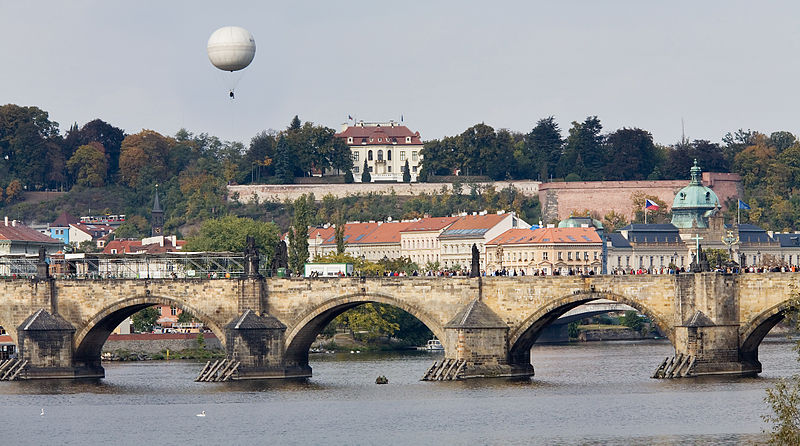
St. Charles Bridge in Prague © Jorge Royan / http://www.royan.com.arCC-BY-SA-3.0 under   Creative Commons Attribution-Share Alike 3.0 Unported

18 December 2012

Vrai ou faux?


As any English-speaking foreigner here knows, some of the most embarrassing language issues center on faux amis (false friends), those expressions in one language that seem like similar ones in another, but in fact, mean something entirely different.  They are like tricks, familiar enough to trip up the reader, and the more I try to learn French, the more it seems I stumble upon them.  For example, one of my friends (a real and true human one) was telling me a few weeks ago that she was going to Marseille to buying some baskets for her daughter for Christmas because she couldn't find the right ones in the right size in Aix.  I wondered just what kind of sweet little baskets she was looking for.  Well, it wasn't the wicker kind at all, but the kind pictured here, because baskets are not baskets in French, but high top sneakers.  (A basket is a panier or corbeille in French.)  Similarly, when we first arrived in Aix, I was asked by someone if my twins were vrai ou faux (true or false).  I managed to keep my indignation to myself when I realized that in fact, those two boys whom I carried for nearly 9 months and birthed as twins are not vrai jumeaux (true, or identical twins) in French, but faux (fraternal, or false) ones, however false it feels to call them that.  Much of French usage is context-based, and there are many of these faux 'faux amis' where a single word can actually mean two different things, depending on the context.  It's like this flocked-to-the-extreme red Christmas tree which I discovered this week on the street in Aix; it looks faux, but in fact is real!


Other language deceptions exist in the realm of pronunciation where there are an awful lot of superfluous letters in French which are not supposed to be pronounced, sometimes.  Those are false friends too in my view.  Young French kids learn French pronunciations and silent letters through memorization, aided by schoolbooks that cross out the silent letters.  I think that would be very helpful for adult learners.  For example, faux amis (silent 's', but do pronounce the 'x' as it carries over to the vowel in the next word: foe za mee) but vrai ou faux  (don't pronounce the x here, vray oo foe), and in those doubly fake friends, faux faux amis (the first x is silent, the second one is not, foe foe za mee).  See what I mean?

In fact, every language plays games with new language learners.  My first language, Finnish, offers nice pronunciation rules, in that every letter in a word is pronounced, so that sounding out words is relatively easy.  But learning what those words mean, and how to use them becomes very difficult when one realizes that long compound words are very common, and that there are over a dozen cases that must be learned; a word like vesi (water) becomes a very different word depending on whether you want to drink it, go in to it, moisten something with it, or are admiring it.  Dangerous deceptions lurk here too; years ago, when I was learning basic Estonian which is closely related to Finnish, I discovered plenty of faux amis, where a word in Finnish like halpa (inexpensive), used perhaps by Finnish tourists when marveling over cheap prices in Estonia, sounds very bad to Estonians because to them halb means bad, or poor quality.  Of course, English is difficult too, with the many homonyms (their, there, they're) and silent letters and difficult sounds: ch, sh, th.

The only consolation is that eventually after enough encounters with different kinds of faux amis, one learns from one's mistakes.  It's rare to meet a faux ami a second time.  Instead, over time, one is able to turn these false friendships into true ones where the once-tricky words or pronunciations actually become useful communication tools, for exchanging niceties, or asking questions, or even sharing confidences, say with neighbors, teachers, or friends.  At those times, the language used may still not come out correctly (it rarely does for me!), but at least there is enough there to create a true and real social connection.

16 November 2012

Les plats traditionnels

We are licking our chops in anticipation of a traditional Thanksgiving meal here that we will prepare à la maison (at home).  While I've got the American fixings for pumpkin pie, we'll work with French ingredients for the rest, as I'll be ordering la dinde (the turkey) next week, the bottle of bubbly aperitif came back with us from the Loire Valley, the pommes de terre (potatoes) originate in French soil, and the stuffing will be made with the ubiquitous French baguettes, stale ends of which are always found on our kitchen counter.  Most importantly though, this food-based ritual, regardless of its origins and its ingredients or even where it's actually taking place, will be enjoyed like other culinary rituals: it will be communally-enjoyed, among friends or family, and it will include renditions of les plats traditionnels (traditional dishes).  We've participated in several such rituals this autumn already, as we await our own celebration.

~In October, we enjoyed aperitifs with two Canadian families in honor of Canadian Thanksgiving.  It turns out the traditional Canadian meal isn't so different from the U.S. version, even though our friends' version is vegetarian and the dates for the thanksgiving meals are about a month apart.  What was perhaps unusual was that, by French standards, the gathering took place early, at la bonne heure, and by North American expectations , we should not have been able to have our drinks outside  (but it was a fall Provençal afternoon which means it was sunny and mild).

~A week or so later, we joined Lyonnaise friends in a French country house kitchen to enjoy a meal typical of Martinique, a French island in the Caribbean.  That meal was prepared by the visiting father of friends, who had brought several 3 liter boxes of dangerously tasty Island rhum agricole (two drinks of rum mixed with syrup or jam plus lime was clearly enough for me, judging from my headache the next morning).  The meal itself was coq (rooster), with all of its 'special' parts (yep, the 'coq' part too), slow-cooked in a jerk-type sauce, accompanied by a dish of beans, all served over rice.  Tasty! 

~The next night, I crossed off 'taste wild boar' from my bucket list.  Along with 30 other people at beautiful candelit tables, we enjoyed a very French autumn meal that started late and ended late (I missed dessert by going to bed around midnight).  We ate dark, rich sanglier (wild boar) prepared in a daube (a wine-based stew) and accompanied by pommes dauphinoise (scalloped potatoes) and sauteed mushrooms, chanterelles and pieds de mouton (a mushroom called mutton's foot).  Alas, the mushrooms were not of our own picking.  To my vast mushroom picking experience, I can now add digging for them through the snow, which is how our mushroom picking expedition ended up earlier that same day.  Fortunately, a champignonnière shop at a lower elevation village with a good supply of mushrooms saved the meal, or at least added to it, as did all the good wine, including my new 'fave', another delicious Chateauneuf du pape wine, Domaine Chante Perdrix.
 

~This week we tasted Algerian specialties, including samosa-type appetizers filled with seasoned ground beef, a chopped red pepper sauce on mini-toasts, followed by the tomato-based and wheat grain-thickened chorba, the soup that traditionally marks the end of Ramadan fasts. Our French-Algerian friends then served us couscous with stewed vegetables and beef and chicken, all cooked in a cocotte minute (a pressure cooker, a very popular item in French kitchens).  Because of Islamic and family traditions, we did not drink wine, but our pineapple upside down cake dessert and the wonderful hospitality were accompanied by the deliciously sweet mint tea.


 ~And finally, while it wasn't a meal, last weekend, one son and I picked olives, an autumn food-based tradition here in the South of France which was every bit as communal and international as our meals this past month, given the friendly conversations in multiple languages taking place among pickers.  We didn't taste the fresh olives (they aren't considered edible until cured or pressed), but the result of our tree climbing and shaking efforts will result in bottles of olive oil, a staple ingredient in many French dishes.


03 May 2012

Les communications internationales

Our family has been on a little multilingual spring break road trip.  We started in Bourgogne (Burgundy) where we attended a rugby tournament and visited Dijon, and then continued to Verdun to see the increasingly faint remains of World War I trenches (as seen in photo) and villages détruits (destroyed villages).  We continued northward into Germany's Saarland, to Trier, to see a roman gate, a holy tunic and Karl Marx's home.  We made a tiny jaunt into Luxembourg to buy some cheap fuel for the car, crisscrossed back through France's Alsace-Lorraine to Germany's Schwarzwald (Black Forest) for some cake, and then returned to the south of France.

Before we left, we had numerous arrangements to make, with sports coaches, French teachers, and friends.  For many such communications, I use texting as it works well for me in terms of French language communications.  (And I think the French find it less painful to read poor French than to hear it spoken!)  I am able to express myself better in written French and I can read French, so textos (text messages) are an excellent way to communicate when I can't understand spoken French instructions or requests, or when I want to ask questions myself.  I've gotten us to sports tournaments and rendez-vous (meetings) and met up with new friends.  I'm even learning some French text language.  If "I don't know", then  je ne c pas works for je ne sais pas.  Text messaging is also very versatile for me when I am faced with multiple languages.  In the past few weeks, I've had textos simultaneously in one day, in French, from two sports coaches, a French mother, or my French teacher, in Finnish, from my new Finnish friend in Aix, and in English, from my kids, husband and a Canadian friend.  It is so marvelous to know that one can correspond and make plans relatively easily with people in multiple languages, all at the same time, with the use of texting.

To my utter dismay, my polyglot texting ability is not matched at present by verbal agility.  I was mostly completely tongue-tied on this vacation, speaking French to the German gasthaus proprietors, oui, oui, je prends un peu (yes, yes, I'll have a little) and German to the French waitstaffs, danke schön, (thank you very much), and resorting to English by default or Finnish in frustration.  Already, my boys have been cringing at my accent when I speak French, and while my German grammar is better than my spouse's, he is far more fluent in spoken German.  On this trip, none of this seemed to matter, as I truly could not verbally express myself clearly in either language.

Fortunately, written language and spoken language can also be combined with body language.  Even if the languages do not come out clearly all the time or the words aren't spelled correctly or in the right order, with gestures and hand signals, we can connect with others and communicate well enough.  Through a combination of these forms of language, we can chat with rugby team parents, find lovely German inns and a former French abbey converted into a hotel, and enjoy delicious local wines and fresh asperge or Spargel (asparagus), and glace or Eis (ice cream), depending on where we are.  On this trip, we were even able to get a car tire fixed in Germany after closing time on the evening before the holiday marking der erste Mai (May Day), thanks to the spouse's German language skills, my body language skills (imagine the pantomime: "Oh dear! What a big nail in the tire!"), and the international language of cold hard cash.

The result?  A very happy May Day spent in both Germany and France, and celebrated in (click here) traditional French fashion with a bouquet of muguet (lily-of-the-valley).